



Dental Implants vs. Dentures vs. Bridges: Which Is Right for You?
Missing teeth affect more than your smile. They can change the way you eat, speak, and even how your jawbone holds its shape over time. If you’re dealing with one missing tooth or several, you’ve probably already discovered there’s no shortage of replacement options, but that also means there’s no shortage of decisions to make.
At Lowry Advanced Dentistry, we walk patients through three main tooth-replacement solutions as part of our restorative dentistry services: dental implants, dentures, and dental bridges. Each comes with its own advantages, trade-offs, and ideal use cases. This guide breaks down what you need to know about each, so you can have an informed conversation with us about what’s right for your smile.
Dental Implants
Dental implants are the closest thing to getting your natural tooth back. A titanium post is surgically placed into the jawbone, where it fuses with the bone over several months. Once healed, a custom crown is attached on top, giving you a replacement tooth that looks, feels, and functions like the real thing. Implants are best for a single missing tooth, multiple gaps, or even a full arch of missing teeth. Our All-on-X implant system can replace an entire row of teeth using just a few strategically placed implants.
Pros:
- Most natural look, feel, and bite function of any option
- Preserves jawbone density by stimulating bone the way a natural tooth root does
- Doesn’t rely on or alter adjacent healthy teeth
- Built to last, often for a lifetime with proper care
Cons:
- Higher upfront investment than dentures or traditional bridges
- Requires adequate jawbone density, though bone grafting can often address this
- Involves a longer treatment timeline to allow for healing and osseointegration
If you want to explore whether implants are a fit, our candidacy page and cost guide are good places to start, or you can review the full benefits of dental implants. If you’re only missing one tooth, our single-tooth implant option may be the simplest solution. Patients who feel anxious about the procedure can also ask about our sedation dentistry options to stay comfortable throughout treatment.
Dentures
Dentures are removable prosthetics designed to replace some or all of your teeth. They’ve come a long way from older generations of dentures. Today’s versions are custom-fitted for a more comfortable, natural-looking result. Dentures are best for patients who are missing most or all of the teeth in an arch and want a non-surgical, more budget-friendly path back to a full smile.
Pros:
- Lower upfront cost compared to implants
- Non-invasive—no surgery required for traditional dentures
- Faster to obtain than implants
- Removable for cleaning and daily maintenance
Cons:
- Can shift or slip, especially with lower dentures, sometimes requiring adhesives
- Don’t stop the bone loss that naturally occurs after teeth are lost
- Need periodic relining or replacement as your mouth changes shape over time
For patients who want more stability without sacrificing the denture format, implant-supported dentures offer a hybrid solution, anchoring a denture to a small number of implants for a far more secure fit. Learn more on our dentures page.
Dental Bridges
A dental bridge fills the gap left by one or a few missing teeth in a row. Traditional bridges are anchored to the natural teeth on either side of the gap, while implant-supported bridges are anchored to implants instead, avoiding the need to alter healthy teeth. They are best for replacing one or a few missing teeth in a row when the surrounding teeth are healthy and structurally sound.
Pros:
- Fixed in place—no removing it at night like dentures
- Faster to complete than implants
- Strong aesthetic results
- Less invasive than implant surgery for traditional bridges
Cons:
- Traditional bridges require grinding down the adjacent healthy teeth to serve as anchors
- Don’t prevent the bone loss that occurs under the missing tooth
- Typically have a shorter lifespan than implants, often 10 to 15 years before replacement is needed
Explore the details on our dental bridges page, or learn more about implant-supported bridges as an alternative to traditional bridgework. If a bridge isn’t the right fit and a dental crown alone would restore your tooth instead, that’s another option worth discussing at your visit.
Weighing Your Options
If cost is your primary concern, dentures typically require the smallest upfront investment. At the same time, implants represent the highest initial cost. However, many patients find that the long-term value evens out, since implants rarely need replacement, whereas dentures and bridges eventually do. If avoiding surgery matters most to you, traditional dentures and bridges are the less invasive options, while implants require surgical placement and a longer healing period. And if preserving your jawbone is a priority, implants are the only option of the three that actively stimulate the bone the way a natural tooth root does. Dentures and bridges don’t prevent the gradual bone loss that follows tooth loss.
In day-to-day life, dentures are removable and require daily cleaning. At the same time, implants and bridges remain fixed in place and are cared for like natural teeth, with regular brushing, flossing, and professional cleanings. Lifespan follows a similar pattern: dentures typically need adjustment or replacement every several years, bridges often last a decade or more, and implants are built to last a lifetime with proper care.
Choosing the right option comes down to a few key factors:
- How many teeth are missing, and where are they located? A single gap, several gaps, or a full arch each point toward different solutions.
- What’s your budget, and what financing options make sense for you? Our dental financing page outlines ways to make treatment more affordable.
- Do you have enough jawbone density to support an implant? This is something we can evaluate with imaging at your consultation.
- Is your gum health in good shape? Underlying issues like gum disease can affect the options available to you, so treatment may need to begin with gum disease treatment first.
- How important is permanence versus removability to your daily routine?
- What’s your ideal timeline for completing treatment?
Why a Personalized Consultation Matters
No two smiles are the same, and the right choice for you depends on your bone density, gum health, budget, and personal goals—not just a generic recommendation. At Lowry Advanced Dentistry, our team takes the time to evaluate your unique situation, using our advanced dental technology to get a precise picture of your dental health before recommending a path forward. Whether your needs are straightforward or more complex, our comprehensive approach to general dentistry, cosmetic dentistry, restorative dentistry, and sedation dentistry means you’re cared for under one roof.
Dental Implants, Dentures, and Bridges in Denver and Littleton, CO
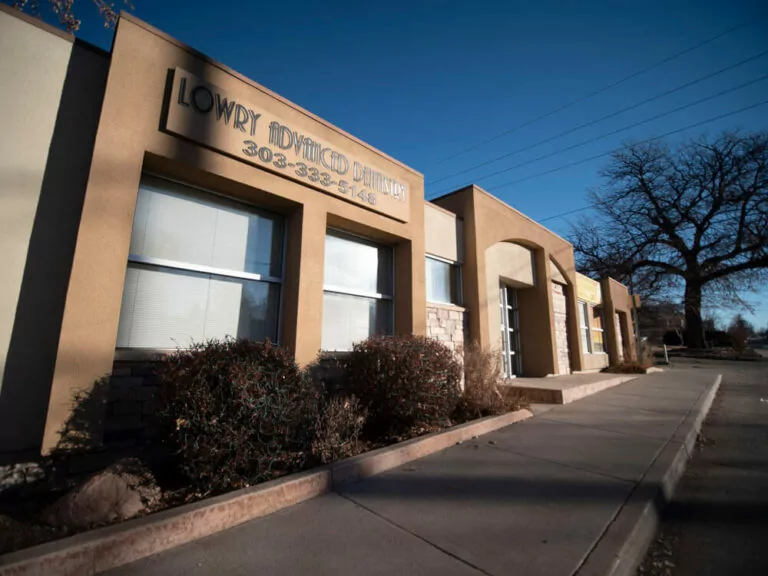
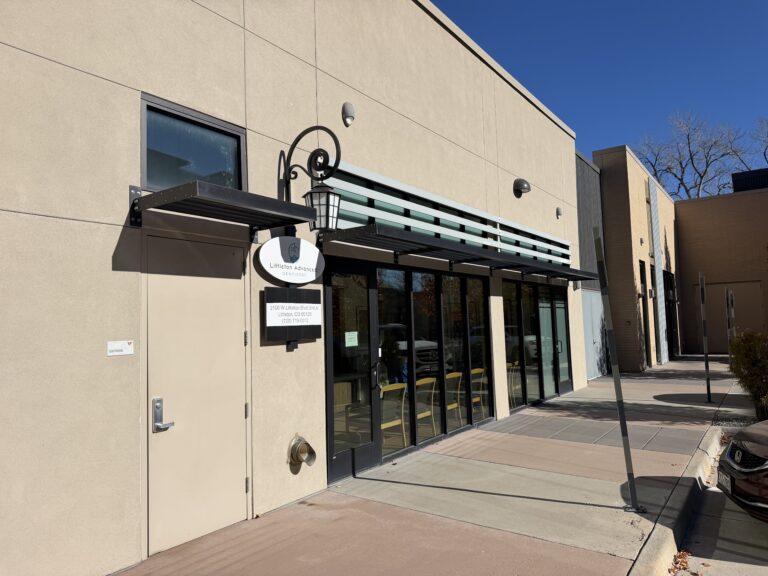
Replacing missing teeth can improve your ability to eat, speak, and smile with confidence. Lowry Advanced Dentistry in Denver and Littleton Dental in Littleton, CO, help patients explore tooth replacement options, including dental implants, dentures, and dental bridges. Our teams can evaluate your oral health, discuss your goals, and recommend personalized restorative dental solutions based on your needs. Schedule a consultation to discover which tooth replacement option may be right for you.
Lowry Advanced Dentistry
7201 E 8th Ave
Denver, CO 80220
303-333-5148
Littleton Dental
2100 W Littleton Blvd, Unit A
Littleton, CO 80120
720-719-0012